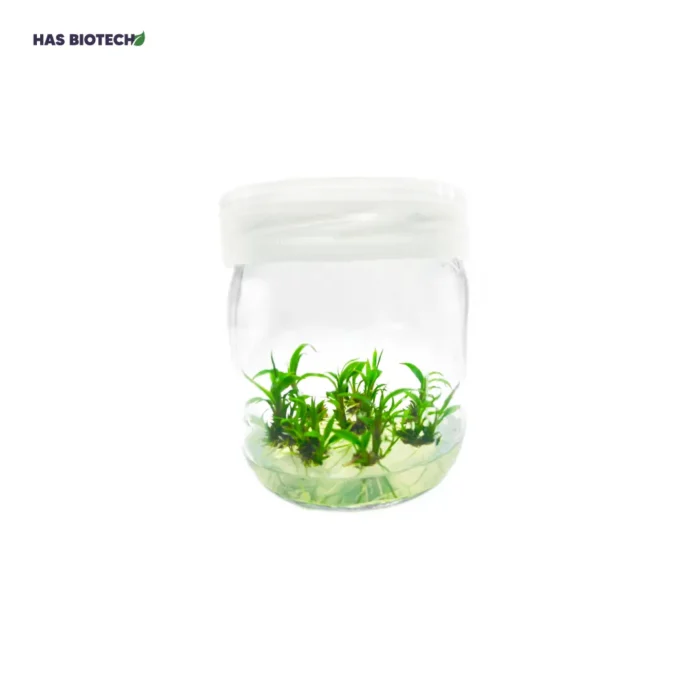
Cordyline — tissue-culture young plants
Palm-like form for mild gardens and for interiors. Cordyline australis stands outdoors in mild climates, while Cordyline fruticosa brings red, pink and variegated leaves indoors. Supplied to the trade worldwide by BYS Flora International.
About Cordyline
Cordyline are evergreen, palm-like shrubs and small trees with rosettes of long, strap-shaped leaves. The two species most grown are very different plants.
Cordyline australis, the New Zealand cabbage palm, is among that country's most widely cultivated native plants and is popular in Europe and the United States. It can reach twenty metres in the wild, but in a pot it is an accent plant. The species, 'Torbay Dazzler' and 'Red Star' all hold the RHS Award of Garden Merit.
Cordyline fruticosa, the ti plant, comes from Papuasia and the western Pacific, and travelled to Hawaii in Polynesian voyaging canoes. It is a tropical species, grown mainly as a house and interiorscape plant and for cut foliage, in red, purple, pink and variegated forms.
What the trade buys it for
- Accent planting
- Patio containers
- House plants
- Interiorscapes
- Cut foliage
- Botanical name
- Cordyline
- Common name
- Cabbage palm, ti plant
- Family
- Asparagaceae
- Native to
- Cordyline australis: New Zealand. Cordyline fruticosa: Papuasia to the western Pacific
- Habit
- Evergreen, palm-like shrubs and small trees
- Mature size
- Cordyline australis 4–8 m tall; Cordyline fruticosa 2.7–4.6 m
- Hardiness
- Cordyline australis RHS H3, to about −5 °C; Cordyline fruticosa cultivars RHS H1b, minimum about 10 °C
- Position
- Cordyline australis: sun or part shade, well-drained soil. Cordyline fruticosa: bright indirect light, moist peat-based mix, high humidity
- Supplied as
- Young plants from tissue culture.
Growing Cordyline on
Cordyline australis makes a deep taproot, so it needs a large, deep container as it grows on. It tolerates salt and wind, which suits coastal sites.
Cordyline fruticosa is very sensitive to fluoride, so keep fluoride out of the water and the medium, and do not let the medium stay soggy. Spider mite and scale are the pests to watch for on both.
Saponins make it toxic to dogs and cats, at low severity, and the sap of Cordyline fruticosa can irritate skin. Cordyline australis has become established in the wild in Britain and Ireland.
How it comes
Young plants from tissue culture. Propagated by our laboratory partner HasBiotech.
Cordyline australis comes from fresh seed, suckers or cuttings, and Cordyline fruticosa from division or stem sections, sold as ti logs. Tissue culture is established for newer Cordyline australis cultivars: one patented cultivar goes from meristem to rooted plug in about four months.
How tissue culture works →Pot sizes, minimum orders and lead times change through the year; a trade account shows what is ready now.
- Phytosanitary CertificateGKGM — Turkish Ministry of Agriculture and Forestry · Every export consignment
- Commercial Invoice and Packing ListBYS Flora International · Every consignment
- Proof of OriginAt origin, in the form the route requires · Where the destination or a tariff preference requires one
- Virus-indexing resultsOur laboratory partner HasBiotech, for tissue-culture material · On request
Into the EU, some plants from Türkiye may only enter under specific conditions, and we check those before we quote.
For other markets we supply the paperwork your customs authority asks for. Documents and plant health
Live availability and trade prices for Cordyline are in the trade account.
Trade buyers only. Applications are read by hand, usually within two working days. If you would rather talk first, WhatsApp or write to our export team.