Kalanchoe — tissue-culture young plants
One of the best-selling flowering pot plants in Europe. Kalanchoe blossfeldiana flowers on short days, so growers can schedule a crop by controlling day length. Supplied to the trade worldwide by BYS Flora International.
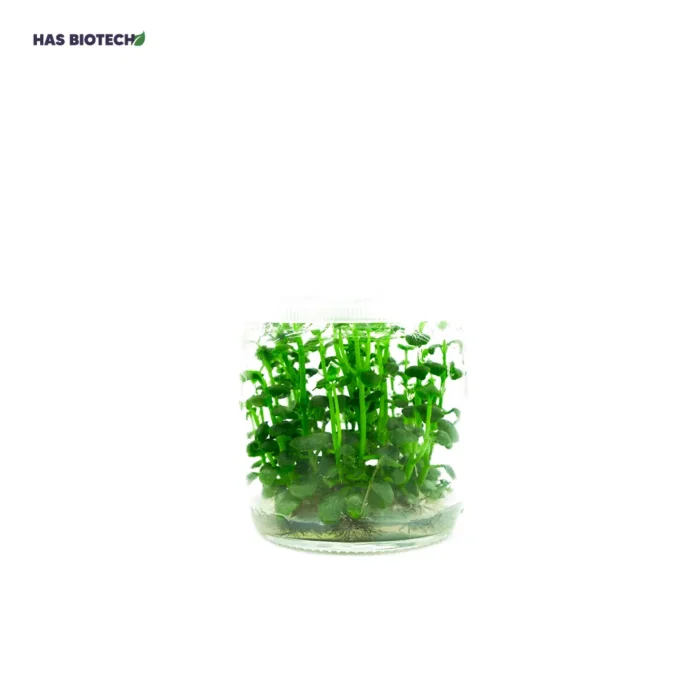
About Kalanchoe
Kalanchoe are succulents of the stonecrop family, most of them from Madagascar and tropical Africa.
Kalanchoe blossfeldiana, from north-east Madagascar, is the pot plant most buyers know. Today's cultivars descend from crosses between species, and double-flowered hybrids have widened the range. In the Netherlands it is also sold as a summer garden plant.
The foliage species make a separate market: the felted Kalanchoe tomentosa, the large-leaved Kalanchoe beharensis and Kalanchoe thyrsiflora from southern Africa. Kalanchoe blossfeldiana, Kalanchoe tomentosa and Kalanchoe beharensis all hold the RHS Award of Garden Merit.
What the trade buys it for
- Flowering pot plants
- Summer garden planting
- Foliage succulents
- Indoor pots
- Botanical name
- Kalanchoe
- Common name
- Flowering succulents
- Family
- Crassulaceae
- Native to
- Madagascar and southern Africa; Kalanchoe blossfeldiana from north-east Madagascar
- Habit
- Succulent subshrubs, from compact pot plants to large foliage forms
- Mature size
- Kalanchoe blossfeldiana 0.15–0.45 m tall; Kalanchoe beharensis 0.5–1 m
- Hardiness
- RHS H1b, minimum about 10 °C; grown indoors or under glass
- Position
- Bright indirect light; free-draining cactus-type mix, dry between waterings
- Supplied as
- Young plants from tissue culture.
Growing Kalanchoe on
To flower, Kalanchoe blossfeldiana needs days shorter than about twelve hours, for at least six weeks.
Grow it on at 18–20 °C. Below 16 °C shoots can go blind, and nights above 21 °C delay flowering.
Keep the medium on the dry side, and watch for aphids, mealybugs, mites, rot and powdery mildew.
Flowers, leaves and stems contain bufadienolides, which can cause irregular heart rhythm and can kill pets if eaten. Plantlet-forming kinds such as Kalanchoe × houghtonii are on invasive checklists in Spain and Italy; no such concern was found for Kalanchoe blossfeldiana.
How it comes
Young plants from tissue culture. Propagated by our laboratory partner HasBiotech.
Cultivars descend from crosses, so they are multiplied vegetatively, normally from cuttings, to keep them the same. Tissue culture of kalanchoe has been documented in research since the nineteen-seventies, and newer protocols work from nodal segments.
How tissue culture works →Pot sizes, minimum orders and lead times change through the year; a trade account shows what is ready now.
- Phytosanitary CertificateGKGM — Turkish Ministry of Agriculture and Forestry · Every export consignment
- Commercial Invoice and Packing ListBYS Flora International · Every consignment
- Proof of OriginAt origin, in the form the route requires · Where the destination or a tariff preference requires one
- Virus-indexing resultsOur laboratory partner HasBiotech, for tissue-culture material · On request
Into the EU, some plants from Türkiye may only enter under specific conditions, and we check those before we quote.
For other markets we supply the paperwork your customs authority asks for. Documents and plant health
Live availability and trade prices for Kalanchoe are in the trade account.
Trade buyers only. Applications are read by hand, usually within two working days. If you would rather talk first, WhatsApp or write to our export team.